How to Crochet a Pet Portrait: Color & Grid Tips
Learn how to crochet a realistic pet portrait from a photo. Expert tips on colour palette, grid size, and stitch mode for dogs, cats, and other pets.
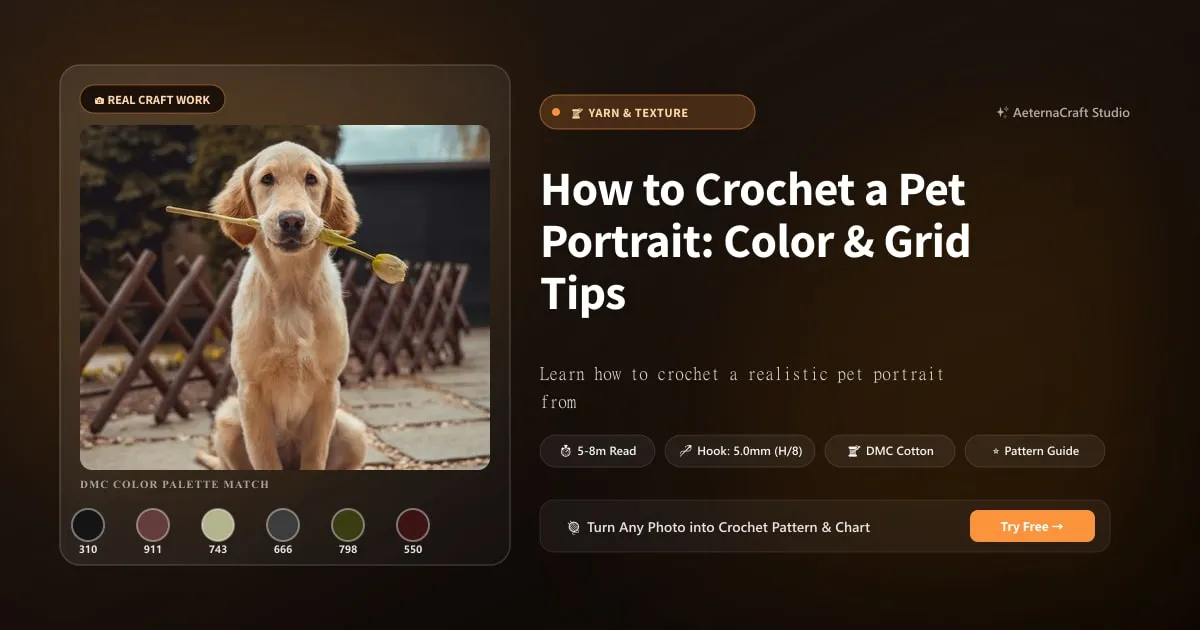
How to Crochet a Pet Portrait: Color Palette & Mesh Grid Tips
A crochet pet portrait is one of the most meaningful projects you can make — it captures the personality of a beloved companion in a tactile, handmade form. But turning a photo of a furry friend into a recognisable crochet pattern requires understanding how colour palettes and grid sizes interact.
Why Pet Portraits Are Challenging
Pets have complex fur patterns: subtle gradients, multi-coloured patches, whiskers, and eye details. A photo of a calico cat might contain 200+ distinct colours. The key to a successful crochet portrait is reducing those colours to a manageable palette while preserving the pet’s identifying features.
Choosing the Right Colour Palette
For Dogs
- Solid-colour dogs (black lab, golden retriever): 8–10 colours. The challenge is capturing fur texture through subtle shade variations rather than colour changes.
- Multi-colour dogs (border collie, beagle): 12–14 colours. You need enough colours to distinguish the different fur zones clearly.
- Merle or brindle patterns: 16–18 colours. These complex patterns require more shades to avoid looking muddy.
For Cats
- Solid cats (black, white, grey): 6–8 colours. Fewer colours needed, but pay attention to eye colour contrast.
- Tabby cats: 12–14 colours. The striping pattern needs distinct shades to be recognisable.
- Calico or tortoiseshell: 14–16 colours. The multi-colour patches require careful palette selection.
For Other Pets
- Rabbits: 8–10 colours. Focus on ear shape and fur texture.
- Birds: 14–18 colours. Birds often have vivid, contrasting colours that need accurate representation.
- Reptiles: 12–16 colours. Scale patterns require fine detail.
Grid Size: Bigger Isn’t Always Better
For pet portraits, the grid size determines how recognisable the result will be:
- 60×60: Good for simple silhouettes or cartoon-style portraits
- 80×100: The recommended size — captures facial features and fur direction
- 100×120: High detail — best for pets with complex patterns or for large blankets
A larger grid doesn’t just mean more detail — it means significantly more work. An 80×100 grid has 8,000 stitches; a 120×150 grid has 18,000. Choose the size that matches your patience and skill level.
Mesh Grid Tips for Fur Texture
- Use C2C (corner-to-corner): C2C creates diagonal rows that blend colour transitions naturally, mimicking the way fur flows.
- Blend at boundaries: Where two fur colours meet, alternate stitches for 2–3 rows to create a natural transition rather than a hard line.
- Add eye sparkle: Use a single white stitch in the eye area to create a catchlight — this tiny detail makes the portrait feel alive.
- Directional stitching: Crochet in the direction the fur grows. For C2C, this means your diagonal rows should follow the fur’s natural flow.
Preparing Your Pet’s Photo
Before uploading to Studio, follow these steps:
- Crop tightly to head and shoulders — facial features are what make a portrait recognisable
- Ensure good lighting — natural daylight reveals true fur colours
- Remove background distractions — a plain background helps the AI focus colour quantisation on the pet
- Eye level — photos taken at the pet’s eye level create the most engaging portraits
Real Pet Portrait Examples
Visit our Gallery to see real pet portrait transformations:
- Golden Retriever blanket (80×100, 12 colours, C2C)
- Tabby cat cushion (90×90, 10 colours, single crochet)
- Cockatiel wall hanging (90×100, 16 colours, single crochet)
Each case study shows the original photo, the generated grid, and the finished crochet piece — so you can see exactly how the colour palette translates from photo to yarn.
Memory Pet Portraits
If you’re creating a memorial portrait of a beloved pet who has passed away, take extra care with the photo selection. Choose a photo that captures your pet’s personality — a favourite sleeping spot, a playful expression, or a signature head tilt. The emotional value of a crochet memorial portrait is immeasurable, and the process of making it can be deeply therapeutic.
Frequently Asked Questions
What is the best grid size for a crochet pet portrait?
80×100 stitches is the sweet spot for pet portraits. This size captures facial features and fur texture without requiring an overwhelming number of colour changes. For smaller projects like cushion covers, 60×60 works well; for large blankets, scale up to 100×120.
How many colours do I need for a realistic pet portrait?
Most pet portraits need 10–14 colours. Dogs and cats with uniform fur (like a black cat or yellow lab) can work with 8 colours. Pets with multi-coloured fur (calico cats, merle dogs) may need 16–18 colours to capture the full range.
Should I use C2C or single crochet for a pet portrait?
C2C (corner-to-corner) is recommended for pet portraits because it creates a tight, woven fabric that holds its shape and displays colour changes cleanly. Single crochet works for smaller portraits but can look slightly textured rather than smooth.
Related Posts
Yarn Color Matching for Photo Crochet Patterns
Learn how to match yarn colours to your photo-to-crochet pattern. Tips for picking yarn brands, matching hex codes, and building a colour-accurate palette.
ToolsChoosing the Right Grid Size for Photo-to-Crochet Patterns
Grid size determines detail, difficulty, and project time. Learn to choose between 40×40 and 150×150 stitches for your photo-to-crochet pattern.
Try Our Free Crochet Tools
Turn Your Photo Into a Crochet Pattern
Upload any photo and our AI generates a pixel-perfect crochet pattern with real yarn color matching in seconds.
Try AeternaCraft Studio Free →Calculate Yarn for Any Resize
Free amigurumi yarn & resizing calculator. Change hook, switch yarn, or scale a whole pattern — instant results with PDF export.
Open the Calculator →